StompyMechs
Found a mercenary company, bolt a machine together in the hangar and take it out on contract. You pilot every sortie yourself from a chase camera with a mouse and keyboard. Your crew talks you through the first shakedown flight in a language of their own.
Back at the hangar
Three build bays share a crane and a parts inventory. Swap an arm or a back unit and the bay tells you what it cost in tonnage, cooling and seconds of sprint. Check the weight limit and negotiate your contract on the command deck, then head down to The Last Round for a freelance wingman or a rumour about the job. Your whole company autosaves to one exportable JSON file.
In the field
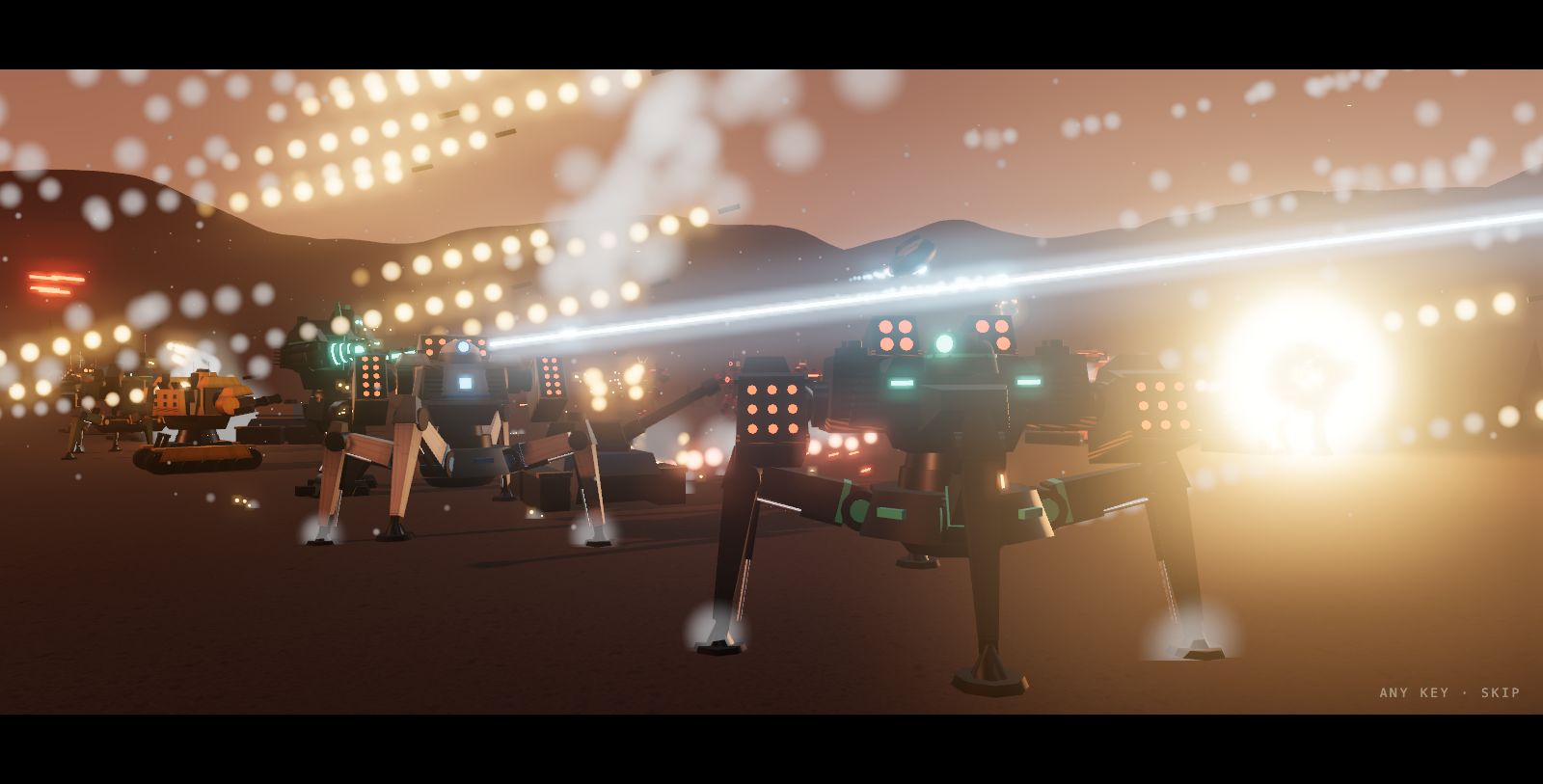
The same heat gauge governs sprinting and firing. Spend it all closing the distance and you risk a shutdown just as you get a clear shot. Knock an arm off a mech and its gun goes quiet. Lose a leg and you’ll limp home. Salvage feeds the next build, with 18 catalogue mechs and 53 weapons to work with.
A sector that remembers
Three rival companies remember your dealings. A wingman on a joint contract can turn up as a competitor in the Iron Derby. Seventeen story threads bring jobs as different as robbing a train and getting every guest home alive from a wedding. Over eight chapters of False Dawn, an orbital array eclipses the sector’s sun. What you do with the Sky Lance determines which of three endings you see.
Inside a single HTML file
Originally called IRONWORKS, StompyMechs loads three.js and builds the rest in code. Height fields shape the terrain, seeds give pilots their faces, and a synthesiser gives each faction its accent. Seven field tracks shift from patrol to combat as a fight heats up. A Python script joins the numbered source fragments into the playable page. Headless Chrome and Firefox drivers fly the chapters, check the rendered picture and measure the synthesised audio.